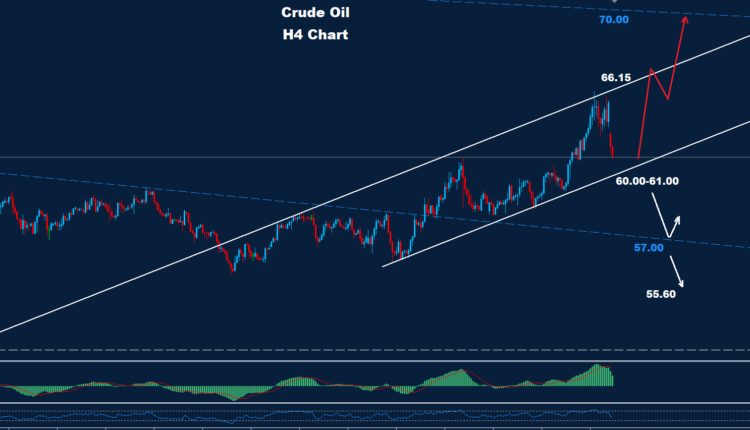
On Tuesday, February 10, 2026, international oil markets trended lower. While the new year began with a rally driven by geopolitical friction, a temporary de-escalation between the U.S. and Iran shifted the focus back to a lackluster fundamental outlook. With global inventories remaining near record levels and production from non-OPEC+ nations staying resilient, prices struggled to maintain upward momentum.
Market Overview
Global and Regional Context
As February progresses, the shadow of a global supply glut persists. According to recent data, while severe winter weather in North America caused a temporary output dip of roughly 1.2 million b/d in January, this disruption failed to alter the broader surplus forecast for 2026. Investors are currently navigating the aftermath of 2025's massive 477 million-barrel stock build, which acts as a heavy anchor on price ceilings.
Core Price Performance (Feb 10)
- Brent Crude: Dipped to the $63.10 - $64.00/bbl range, retreating from previous weekly highs.
- WTI Crude: Settle at $60.44/bbl (Plains Posting), down approximately $0.40 from the prior session.
Market Highlights
Supply-Side Volatility
Weather Recovery: The extreme cold that curtailed U.S. and Canadian production in January has abated, with capacity returning to the market faster than anticipated.
OPEC+ vs. Market Realities: Markets are eyeing the upcoming IEA monthly report, which expects world oil output to rise by 2.4 million b/d in 2026, split between OPEC+ and non-aligned producers.
Structural Shifts in Demand
Petrochemical Resilience: In an environment where transport fuel growth is structuralized by EV adoption, petrochemical feedstocks are expected to account for over half of 2026's total demand gains.
China's Growth Role: While Asian demand remains the primary growth driver, the pace is viewed as insufficient to absorb the expanding global supply.
Technical Outlook
Key Support Levels: Analysts note that oil is testing the bottom of its current uptrend channel. While support at $60.00 - $61.00 remains intact for now, a break below this level could invite fresh selling pressure toward $57.
Key Drivers and Indicators
| Driver | Status | Impact Description |
|---|---|---|
| WTI Spot Price | $60.44 | A 0.6% decline reflecting underlying fundamental weakness. |
| Geopolitical Risk | Cooling | Tensions in the Middle East stabilized, leading to a pull-back in risk premiums. |
| Global Inventories | Rising | Preliminary January data indicates a further build of 49 million barrels. |
| 2026 Demand Growth | +850 kb/d | IEA's forecast remains well below the projected supply growth. |
Outlook
Analysts anticipate that oil prices will likely remain range-bound with a bearish bias for the remainder of February. Without a significant supply shock, the overhang from 2025 is expected to keep Brent anchored near $60, with potential for further weakness in the second quarter as seasonal maintenance begins.