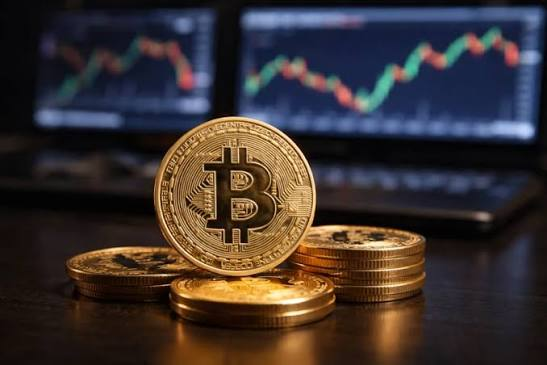
The cryptocurrency market remained in consolidation and recovery mode on July 10, 2026. After recent volatility driven by geopolitical uncertainty, Federal Reserve policy concerns, and corrections across risk assets, digital assets began to stabilize.
Bitcoin traded at approximately $63,000 to $64,000, while Ethereum held around $2,700. The prevailing theme was continued institutional accumulation, with macro uncertainty still limiting upside momentum.
Global Crypto Market Context
1. Federal Reserve Policy Remains a Key Driver
Crypto markets continued to react strongly to inflation data, Treasury yields, U.S. dollar strength, and expectations for Federal Reserve interest rates. Lower rates could improve liquidity conditions and support demand for digital assets.
2. Bitcoin Holds Above $60,000
| Asset | Level | Market Condition |
|---|---|---|
| Bitcoin (BTC) | Around $63K | Consolidation |
Bitcoin found support from ETF demand, institutional buying, and reduced selling pressure. Recent Bitcoin ETF inflows of around $143 million helped reinforce the market.
3. Ethereum Institutional Demand Improves
Ethereum's main areas of focus included ETF flows, Layer 2 growth, real-world asset tokenization, and a potential DeFi recovery. Ethereum continued to develop as a layer of institutional financial infrastructure.
4. Stablecoin Regulation Becomes Critical
Investors continued to monitor USDT, USDC, MiCA regulation, and the emerging U.S. stablecoin framework. Stablecoins are increasingly functioning as both liquidity infrastructure and payment rails.
Major Crypto Performance
| Asset | Price Area | Trend |
|---|---|---|
| Bitcoin (BTC) | About $63K | Recovery consolidation |
| Ethereum (ETH) | About $2.7K | Stable |
| Solana (SOL) | Consolidation | Range-bound |
| XRP | Range trading | Neutral |
| BNB | Stable | Neutral |
Sector Highlights
Bitcoin: Institutional Demand Leads the Market
The structure of the Bitcoin market has evolved. Earlier cycles were driven primarily by retail speculation, while current cycles are increasingly shaped by ETF flows and institutional participation.
AI Crypto Sector
AI blockchain projects remained a major theme in 2026. Areas of interest included decentralized computing, GPU marketplaces, and AI infrastructure networks.
Projects being watched included TAO, RNDR, and AKT.
DeFi Sector
Investors increasingly focused on sustainable revenue, real usage, and protocol economics rather than speculative yields.
Crypto Assets to Watch
For market reference only, not investment advice.
| Asset | Theme |
|---|---|
| BTC | Institutional store of value |
| ETH | Blockchain infrastructure |
| SOL | High-performance ecosystem |
| XRP | Payment narrative |
| BNB | Exchange ecosystem |
| LINK | Real-world asset infrastructure |
| RNDR | AI computing demand |
Market Drivers
1. ETF Flows
ETF inflows and outflows remained the strongest short-term indicator of institutional demand and market sentiment.
2. Liquidity Conditions
Crypto increasingly traded like a growth technology asset class. Key drivers included the U.S. dollar, interest rates, and global liquidity conditions.
3. AI Infrastructure Growth
AI expansion supported demand for GPUs, computing networks, and decentralized infrastructure.
4. Crypto Market Maturity
| Period | Defining Feature |
|---|---|
| Early crypto | Speculation |
| 2024-2025 | Institutional adoption |
| 2026 | Infrastructure competition |
Outlook
Key Catalysts
- Inflation data, Federal Reserve policy, and the U.S. dollar trend
- A Bitcoin breakout above $65K and sustained ETF demand
- Ethereum ETF activity and Layer 2 adoption
- Stablecoin regulation
- AI crypto infrastructure
- Real-world asset tokenization
Short-term outlook: Bitcoin consolidation, Ethereum waiting for a breakout, and AI crypto seeking the next capital rotation.